

• Title:
    Green Coffee
  • Price:$0.00
  • SKU:
    1111
  • Volume: 
    1111
 
 
Purified Water
Purified water provides the clean foundation for our Green Coffee Elixir. By removing unwanted impurities, purified water allows the natural flavours and characteristics of our green coffee, botanicals, fruit juices, and fermented ingredients to shine through. It also provides a consistent base for our fermentation and blending process, helping us maintain the quality, balance and integrity of every bat
 
Pineapple Juice
Pineapple juice naturally contains a variety of plant compounds, organic acids, vitamins and minerals. In our Green Coffee Elixir, deionized pineapple juice provides a naturally derived foundation that complements the green coffee, botanicals, fruit juices and fermentation process while helping create a balanced and refreshing flavour.
 
Yerba Mate (Ilex paraguariensis)

Yerba mate is a traditional South American botanical naturally rich in polyphenols and other plant compounds. Unlike green tea, yerba mate contains a distinctive profile of polyphenols, including several chlorogenic acid derivatives. These naturally occurring antioxidants have made yerba mate an increasingly interesting ingredient in research exploring metabolic health, oxidative stress, and overall wellness.

In our Green Coffee Elixir, yerba mate complements green coffee as another naturally rich source of chlorogenic acids and beneficial plant compounds.

Indian Robusta Green Coffee Beans

Green coffee beans are coffee beans in their natural, unroasted state and are particularly valued for their naturally occurring chlorogenic acids.

Chlorogenic acid is a polyphenol antioxidant that has been widely studied for its potential influence on glucose and fat metabolism. Research suggests that chlorogenic acids may affect how the body processes glucose following a meal and may play a supportive role in healthy metabolic function.

Rather than roasting or extracting our green coffee, we sprout and ferment the whole beans as part of our whole-food approach.

Malic Acid

Malic acid is an organic acid that occurs naturally in many fruits and vegetables and is especially associated with the tart flavour of green apples.

Malic acid also participates naturally in the body's energy-producing pathways. In our formulation, it contributes to the distinctive tart, refreshing flavour profile of the finished elixir while complementing the organic acids naturally produced through fermentation.

Moringa (Moringa oleifera)

Often called the Drumstick Tree, moringa is a nutrient-rich plant traditionally used as both a food and botanical. Its leaves naturally contain vitamins, minerals, amino acids, and an impressive variety of antioxidant plant compounds, including polyphenols such as chlorogenic acid.

Moringa's broad nutritional profile makes it a natural complement to our whole-food formulation and our philosophy of providing nutrition from diverse plant sources rather than relying solely on isolated compounds.

Raspberry Juice

Raspberries are naturally rich in vitamin C and colorful plant compounds, including anthocyanins and other polyphenol antioxidants.

We include raspberry juice not only for its naturally occurring phytonutrients, but also for the bright fruit character it brings to our fermented botanical blend. It is another example of our approach to obtaining beneficial plant compounds from recognizable, whole-food ingredients.

Elderberry Juice
Elderberries are deeply pigmented berries naturally rich in anthocyanins and other antioxidant polyphenols. Traditionally valued as a botanical and increasingly studied for their unique phytonutrient profile, elderberries contribute both antioxidant plant compounds and rich fruit character to our formula.
 
Fermentation adds another dimension by naturally transforming components of the juice as part of our proprietary culture process.
 
Pomegranate Juice

Pomegranate is naturally abundant in polyphenols, including ellagitannins and anthocyanins, which contribute to its deep colour and antioxidant properties.

These distinctive plant compounds have made pomegranate an important subject of nutritional research. In our Green Coffee Elixir, pomegranate contributes both its naturally occurring phytonutrients and its characteristic bright, tart flavour.

Tart Cherry Juice

Tart cherries are naturally rich in anthocyanins—the colorful polyphenols responsible for their deep red pigmentation—as well as a variety of other antioxidant plant compounds.

Research continues to explore tart cherries and their phytonutrients in relation to oxidative stress, inflammation, recovery, and metabolic health. In our formula, tart cherry juice undergoes fermentation as part of our whole-food process, bringing another diverse source of plant polyphenols to the finished elixir.

Green Tea (Camellia sinensis)

Green tea is naturally rich in a group of antioxidant polyphenols known as catechins, including EGCG. These compounds have been extensively studied for their potential roles in metabolism, cardiovascular health, and protection from oxidative stress.

Rather than focusing solely on isolated green tea extracts, we incorporate green tea into our fermented botanical blend, allowing it to contribute its naturally occurring spectrum of beneficial plant compounds.

Rooibos Tea (Aspalathus linearis)

Green rooibos is an unfermented form of the South African rooibos plant and contains a distinctive antioxidant called aspalathin.

Aspalathin and other rooibos polyphenols continue to be studied for their antioxidant properties and potential relationship with metabolic health. Green rooibos adds another unique botanical and antioxidant profile to our diverse whole-food formulation.

Potassium Sorbate

Potassium sorbate is the potassium salt of sorbic acid and is widely used in foods and beverages to help maintain freshness and product stability.

In our Green Coffee Elixir, potassium sorbate helps inhibit the growth of unwanted yeasts and molds, helping preserve the quality and stability of the finished beverage.

Natural Flavors

Natural flavors are derived from natural sources such as fruits, vegetables, herbs, spices, and other plant or animal materials. Their primary purpose in food and beverages is to provide or enhance flavor and aroma.

We use natural flavors to complement the complex taste created by our green coffee, botanicals, fruit juices, and fermentation process and to create a balanced, enjoyable finished beverage.

Potassium Metabisulfite

Potassium metabisulfite is commonly used in fermented foods, wines and beverages as an antioxidant and preservative. It helps protect against oxidation and unwanted microbial activity, supporting the stability, flavour, and colour of the finished product.

Sulfites can cause reactions in individuals who are sensitive to them, which is why their presence is important to clearly identify on product labeling.

Reviews

Submit a Review

Overall Rating

0

There are currently no reviews for this product.

Sprouted & Fermented Green Coffee
 
Zero Xeno Sprouted & Fermented Green Coffee Elixir is a whole-food-based beverage thoughtfully crafted to support healthy metabolism, weight management and overall wellness.
 
At the heart of our Green Coffee Elixir is our proprietary fermented Kombucha/Kefir culture base. Combined with a nutrient-rich blend of carefully selected herbs and plant-based ingredients, it provides naturally occurring vitamins, minerals, antioxidants and other beneficial compounds in a highly accessible, bio-available form.
 
One of the key ingredients is sprouted green coffee beans. Green coffee beans are naturally rich in chlorogenic acid, a powerful antioxidant. Research suggests that chlorogenic acid may help support healthy glucose and fat metabolism and, when combined with a balanced diet and healthy lifestyle, may contribute to healthy weight management.
 
We sprout our green coffee beans as part of our whole-food approach, then bring them together with our culture base and botanical ingredients for fermentation to create a uniquely nourishing formula.
 
Fermentation adds another important dimension. During this natural process, beneficial cultures metabolize sugars and produce a variety of fermentation compounds. Fermentation may also help make certain nutrients more accessible while reducing some naturally occurring compounds that can interfere with nutrient absorption.
 
The result is more than a refreshing beverage. Zero Xeno brings together sprouting, fermentation, green coffee and thoughtfully selected botanicals in one distinctive whole-food formula designed to complement a healthy lifestyle and support everyday wellness.
 
Benefits
  • Whole Sprouted & Fermented Green Coffee Beans
  • Artificial Sweetener-Free
  • Antioxidant Rich Juice Base
  • Minimum 300 mg of Active Chlorogenic Acid per 30 ml dose (2x per day)
  • Daily 60 ml Dose Equivalent to 1200 mg Green Coffee Extract
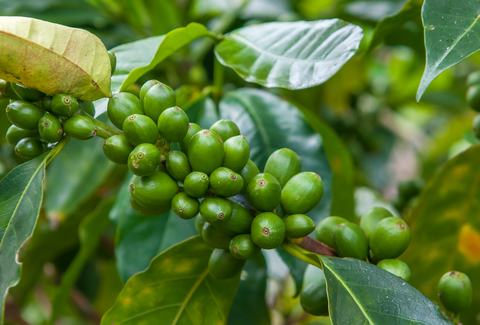
Raw & Whole
 
We believe nature provides ingredients in their most complete form. That’s why we start with whole, raw green coffee beans and carefully selected botanicals, preserving their naturally occurring vitamins, minerals, antioxidants and beneficial plant compounds.
 
Unlike many green coffee products that rely on heat or chemical extraction to isolate specific compounds, we take a whole-food approach. Instead, we sprout and ferment green coffee beans, yerba mate and other botanicals, two natural processes that help preserve the integrity of the ingredients and their naturally occurring antioxidant polyphenols, including chlorogenic acid.
 
By choosing sprouting and fermentation over conventional extraction methods, we keep the focus on the whole ingredient rather than an isolated extract. It’s this commitment to raw, whole-food ingredients and natural processing that helps set Zero Xeno Sprouted & Fermented Green Coffee Elixir apart.
 
Endocrine Disrupting Chemicals & Weight Management
 
Obesity has become a significant and growing public health concern worldwide. According to the Government of Canada, approximately 65% of Canadian adults were classified as overweight or obese in 2021. A 2025 study detected endocrine-disrupting chemicals in the visceral adipose tissue of human participants, hightlighting the presence of these environmental chemicals in body fat.
 
While diet, physical activity, genetics, sleep and other lifestyle factors are well-recognized contributors to weight and metabolic health, researchers are investigating another potential piece of this complex puzzle, our exposure to endocrine-disrupting chemicals.
 
Endocrine-disrupting chemicals, or EDCs, are substances that can interfere with the body’s natural hormone systems. Because hormones play an important role in regulating metabolism, appetite, blood sugar, fat storage and energy balance, researchers are studying whether certain EDCs may influence the way our bodies regulate weight and metabolic health.
 
Of particular interest are chemicals being studied as “obesogens.” These substances may influence biological processes involved in fat-cell development, energy metabolism, appetite and the regulation of body weight. Researchers are also investigating whether exposure during sensitive stages of development may produce metabolic effects that extend later into life.
 
Obesity is complex and cannot be attributed to any single cause. However, a growing body of research is examining endocrine-disrupting chemicals as a potential environmental contributor to obesity and metabolic dysfunction. This emerging area of science is expanding the conversation beyond simply how much we eat and exercise to include the possible influence of the chemical environment in which we live.
 
Research on Endocrine Disruptors, Obesogens & Metabolic Health
 
Obesogens
 
Scientists use the term “obesogens” to describe certain endocrine-disrupting chemicals that are being studied for their potential influence on weight regulation, fat storage, and metabolic health.
 
Hormones are the body’s chemical messengers. They help regulate many important processes, including appetite, blood sugar, metabolism, energy balance and the way our bodies store and use fat. Endocrine-disrupting chemicals can interfere with normal hormone signaling, which has led researchers to investigate whether exposure to certain chemicals may contribute to changes in metabolism and weight regulation.
 
Potential obesogens can be found among a variety of environmental chemicals, including certain pesticides, plasticizers, flame retardants and other industrial compounds. Some can mimic or interfere with hormones such as estrogen, while others may affect different hormonal and metabolic pathways.
 
The World Health Organization (WHO) and United Nations Environment Programme (UNEP) have identified endocrine-disrupting chemicals as an important area of research because of their potential effects on human health. Scientific research continues to explore the relationship between exposure to these chemicals and a range of hormone-related and metabolic effects, including obesity.
 
The emerging science of obesogens adds another dimension to the way we think about weight and metabolic health. Rather than viewing weight solely through the lens of calories and exercise, researchers are examining how our broader environment, including the chemicals we encounter in everyday life may also influence the body’s complex systems for regulating metabolism and body weight.
 
More Research
 
A growing body of research is examining the relationship between exposure to endocrine-disrupting chemicals and metabolic health. Studies have investigated associations between certain EDCs and conditions such as obesity, metabolic syndrome, insulin resistance, and type 2 diabetes. Researchers are also exploring how some of these chemicals may interfere with the hormonal pathways involved in glucose regulation, fat metabolism, and energy balance.
 
At the same time, researchers are studying naturally occurring plant compounds that may support metabolic health. One compound of particular interest is chlorogenic acid, a naturally occurring polyphenol and antioxidant found in green coffee beans.
 
In a 2021 animal study, researchers examined the effects of chlorogenic acid in mice fed a high-fat diet. The study found that chlorogenic acid was associated with reduced fat accumulation and inflammation in the liver, changes in the gut microbiome, improved intestinal barrier function, and increased levels of GLP-1, a naturally occurring hormone involved in blood sugar regulation, appetite, and metabolism.
 
While animal research cannot be assumed to produce the same results in humans, these findings add to a growing area of research investigating chlorogenic acid and its potential role in metabolic, gut and liver health.
 
Together, this research raises an intriguing question: as scientists continue to investigate how environmental chemicals may influence our metabolic health, could naturally occurring plant compounds such as chlorogenic acid also play a supportive role in maintaining healthy metabolic function?
 
Scientific Evidence - Fermentation
 
Polyphenols are naturally occurring plant compounds with antioxidant properties that continue to be widely studied for their potential role in supporting human health. Chlorogenic acid, one of the primary polyphenols naturally found in green coffee, has attracted particular interest for its potential effects on metabolic health.
 

An important consideration with polyphenols is bioavailability, how effectively these beneficial plant compounds are released from food, absorbed, metabolized, and ultimately made available for use by the body. The amount of a polyphenol present in an ingredient does not necessarily tell us how much will become biologically available after it is consumed.

This is where fermentation becomes particularly interesting.

During fermentation, beneficial bacteria and yeasts naturally transform components of plant foods. These microorganisms and their enzymes can break down complex plant compounds into smaller or different forms, potentially improving the accessibility and bioavailability of certain nutrients and polyphenols.

Fermentation may also transform polyphenols into metabolites that interact differently with the body. Our intestinal microbiome plays an additional role, further metabolizing many plant polyphenols after they are consumed. For this reason, researchers are increasingly interested not only in how many polyphenols a food contains, but also in how food processing, fermentation and the gut microbiome influence their ultimate bioavailability.

This science is one of the reasons fermentation is central to our process. Rather than relying on harsh extraction methods to isolate chlorogenic acid, we combine whole green coffee beans and botanicals with sprouting and fermentation, a whole-food approach designed to preserve and naturally transform the beneficial compounds found within the plants.

Our Approach
 
At the heart of our Sprouted & Fermented Green Coffee Elixir is our proprietary fermentation process, using carefully selected symbiotic cultures to naturally transform whole green coffee beans, yerba mate and other botanicals.
 
Green coffee and yerba mate are natural sources of chlorogenic acid, a family of antioxidant polyphenols that continue to be studied for their potential role in glucose metabolism, fat metabolism and overall metabolic health.
 
Rather than using chemical or high-heat extraction methods to isolate these compounds, we take a whole-food approach. Through sprouting and fermentation, our goal is to naturally transform the plant material while maintaining the broad spectrum of beneficial compounds found within it. Fermentation may also influence the accessibility and bioavailability of certain polyphenols and produce metabolites that can be utilized differently by the body.
 
Research into chlorogenic acid is particularly interesting. Studies have explored its potential influence on glucose regulation, lipid metabolism, oxidative stress, inflammation, and other processes associated with metabolic health. While research continues to determine the significance of these effects in humans, the findings provide an exciting area for continued scientific investigation.
 
For Zero Xeno, this is where traditional food processes and modern nutritional science come together. We sprout. We ferment. And we use whole plant ingredients rather than isolated extracts, all with the goal of creating a thoughtfully crafted beverage that supports healthy metabolism and everyday wellness.
 
There is still much to learn about chlorogenic acid, fermentation, the gut microbiome and metabolic health. As the science continues to evolve, so does our understanding of how these naturally occurring plant compounds may help support the body's own metabolic processes.